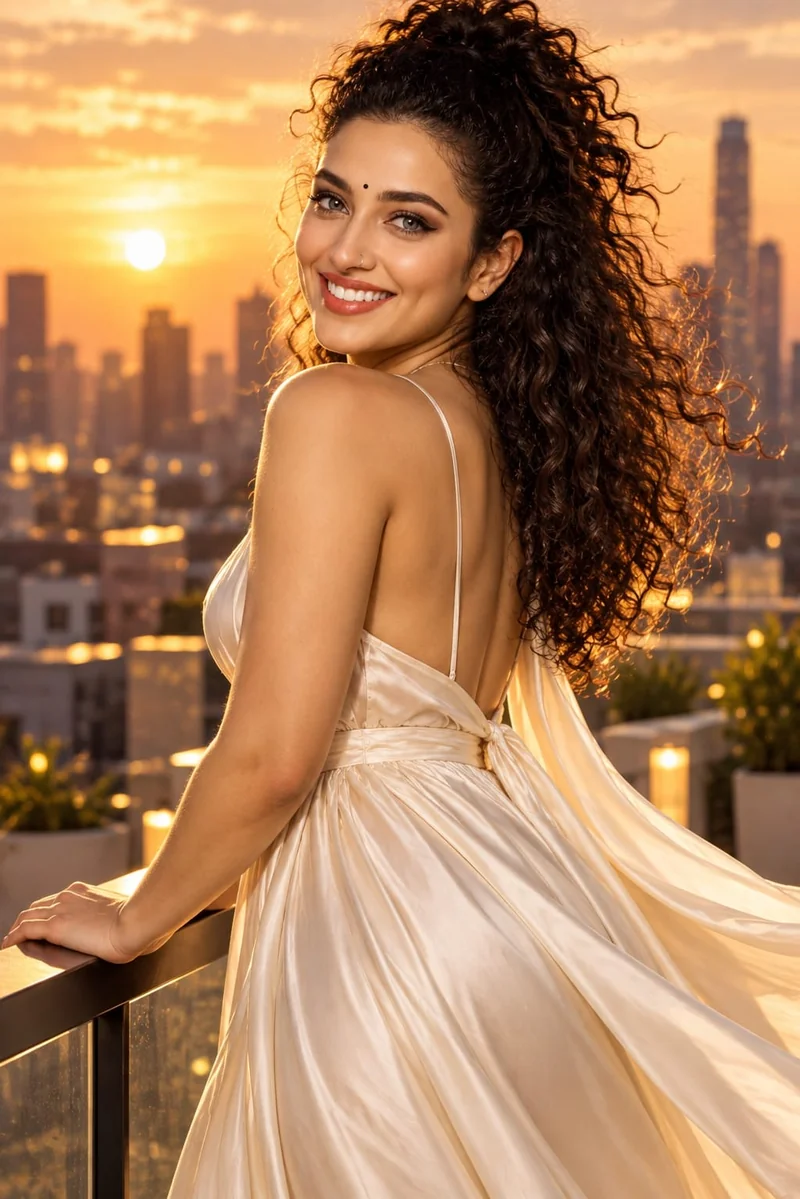
A compelling image begins before the first line of a prompt. It begins with a decision: what should this image make someone notice or feel? That intention gives every other choice a purpose.
Give the subject a reason to be there
“A portrait in a palace” is a setting. “A quiet editorial portrait that makes intricate ivory embroidery feel tactile” is a direction. The second brief helps you decide the posture, framing and light without stacking unrelated adjectives.
Write a short sentence about the subject and the moment. Then describe the surroundings. Keep the main subject easy to identify; a long list of competing objects can weaken the composition.
Describe light as an action
Light shapes what we see. A soft window light can reveal fabric; a low sunset can separate a silhouette from the landscape. Instead of simply asking for “cinematic lighting,” say where the light comes from and what it should reveal.
Try changing only the light between two versions. Comparing a single variable makes it easier to understand which choice changes the mood.
Leave room for an image to breathe
Specify a useful frame: full-length, close portrait or a wider environmental view. Choose an aspect ratio that fits the intended use. A vertical fashion portrait and a wide page banner need different compositions, even when the subject is the same.
Avoid adding detail solely because the prompt feels short. Include details that reinforce the intention, and remove those that compete with it.
Review the result against the brief
Ask whether the subject is clear, the face is consistent with an approved reference and the setting supports the story. A technically polished result can still miss the original intention.
Record what changed, keep useful versions and label any inferred recreation prompt honestly. A prompt is a starting point for creative work; it is not a guarantee that every tool will produce the same image.